What Whop is
Whop is a payments and commerce platform. It started in 2021 as a marketplace for digital products (communities, courses and software) and now processes card, Apple Pay, Google Pay and other payments for online businesses, including stores selling physical products. Whop is based in New York and is backed by venture investors.
For sellers, the key point is in Whop's own documentation: Whop is the merchant of record on the payments it processes. That means Whop is responsible to the card networks for those sales, which explains its identity checks, holds and reserves.
Is Whop legit for sellers?
Yes, with the same rules as any payment processor:
- You verify your identity. Whop asks for KYC details before it pays you out. Until then, money stays pending.
- You pay published fees. 2.7% + $0.30 per successful domestic card payment, 1.5% more for international cards, 1% more for currency conversion, $15 per dispute. See our full Whop fees breakdown.
- Some money can be held for a while. Whop holds part of a balance when the risk of refunds and disputes is high, then releases it automatically.
Why Whop holds or reserves money
From Whop's reserves documentation, a reserve is placed or increased when:
- the account is new or has little sales history
- refunds and disputes are high compared with sales
- customers open many unresolved Resolution Center cases
- delivery happens long after payment (pre-orders, bookings)
- sales patterns change suddenly
Whop describes reserved funds as still yours: they move to your available balance on the release date, or immediately if Whop removes the reserve.
What triggers fraud holds on a new account
Separate from reserves, Whop's risk checks can put individual payments on a fraud hold. The patterns that look risky to any processor:
- many small payments in a short time (it looks like card testing)
- the same card paying on several accounts, or many accounts with similar emails
- billing address, card country and buyer location that don't match
- payments without 3-D Secure on a brand-new account
If you test your own checkout, do it in Whop's sandbox, or with one real account, one card and your real address. Real customers buying real products rarely look like that.
Is Whop safe for buyers?
Buyers pay through Whop's checkout, so their card details go to Whop, not to the seller. If an order goes wrong, the buyer can open a case in Whop's Resolution Center; the seller has 7 days to resolve it before Whop steps in. Card disputes with the bank remain available as usual.
How Whop payments work on Shopify
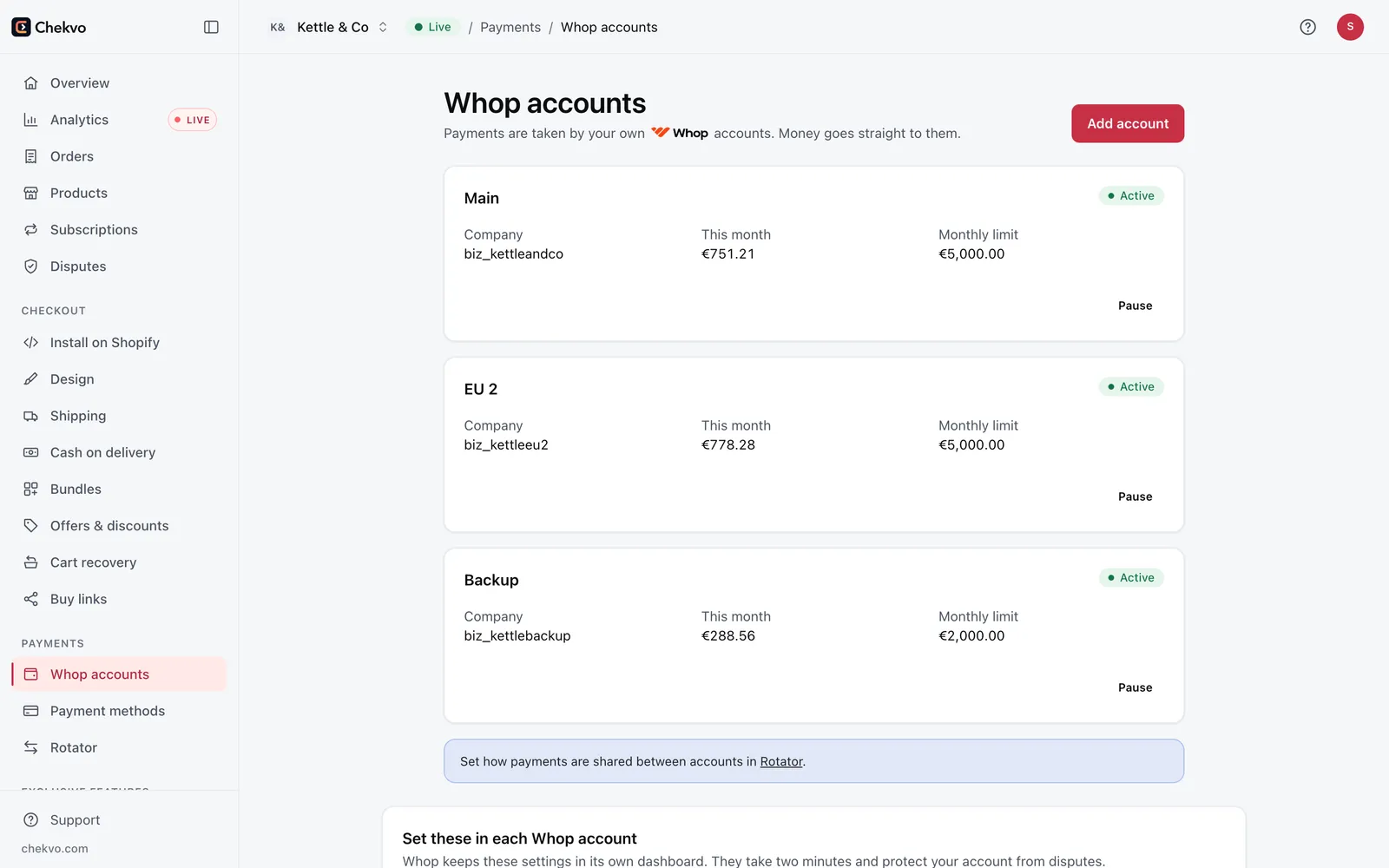
Shopify doesn't list Whop as a built-in payment provider. Shopify stores use Whop through a checkout that connects both: the shopper pays on a branded checkout, the payment goes to the merchant's own Whop account, and the order is created in Shopify. Our guide to Whop payments for Shopify explains the setup, and the best Whop checkout apps compares the options.
How to keep a Whop account healthy
- Complete identity verification before you send traffic.
- Use a clear statement descriptor so buyers recognise the charge.
- Refund quickly when a customer asks: Whop calls it the fastest way to keep disputes down.
- Add tracking for physical orders and upload your terms, refund and shipping policies.
- Ramp up gradually instead of moving all your volume in one day.
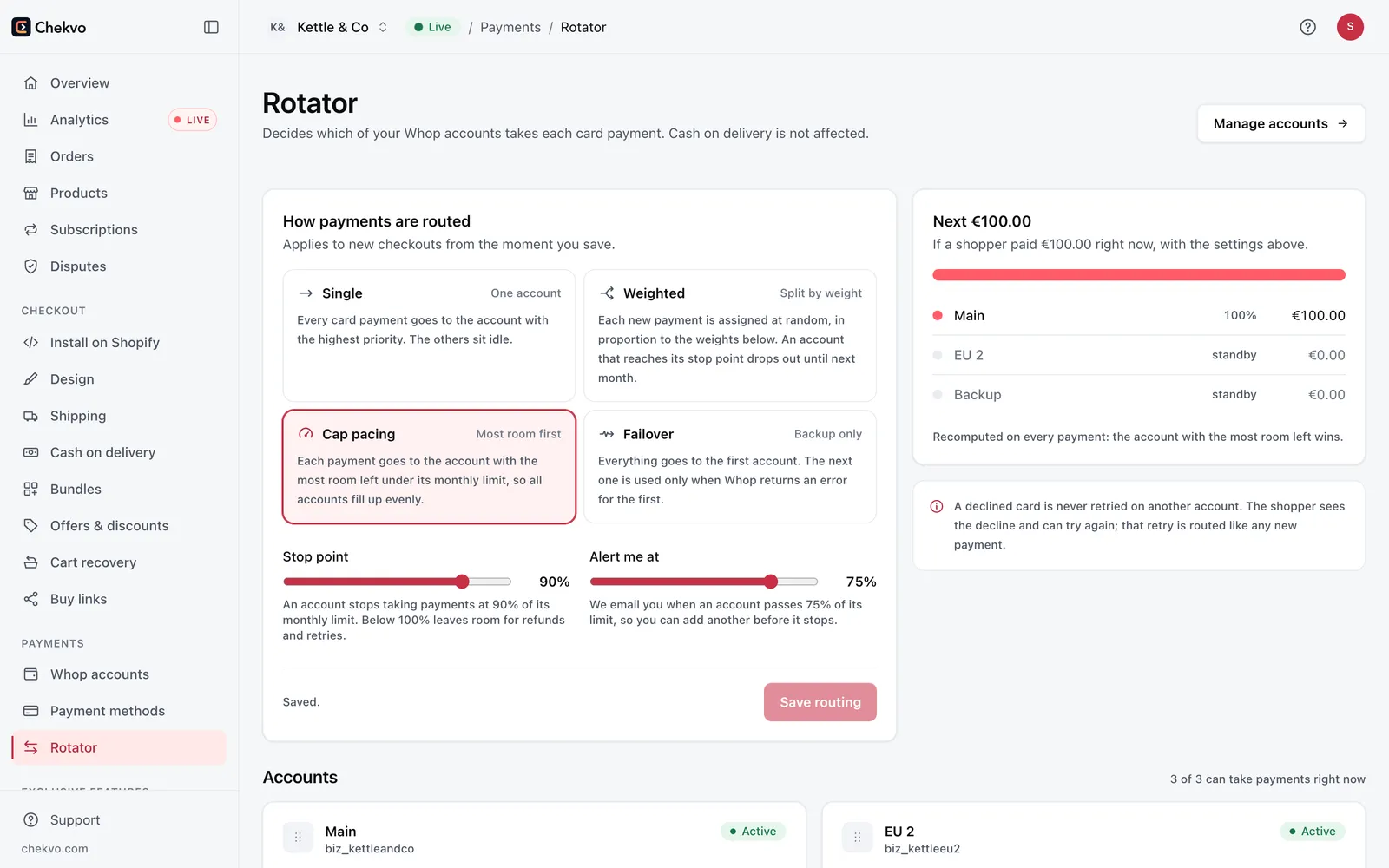
- Keep a second account ready if your volume justifies it.